Notice
Detect a weak signal, change or contradiction before it disappears into noise.
 KATOYING / YOKAI
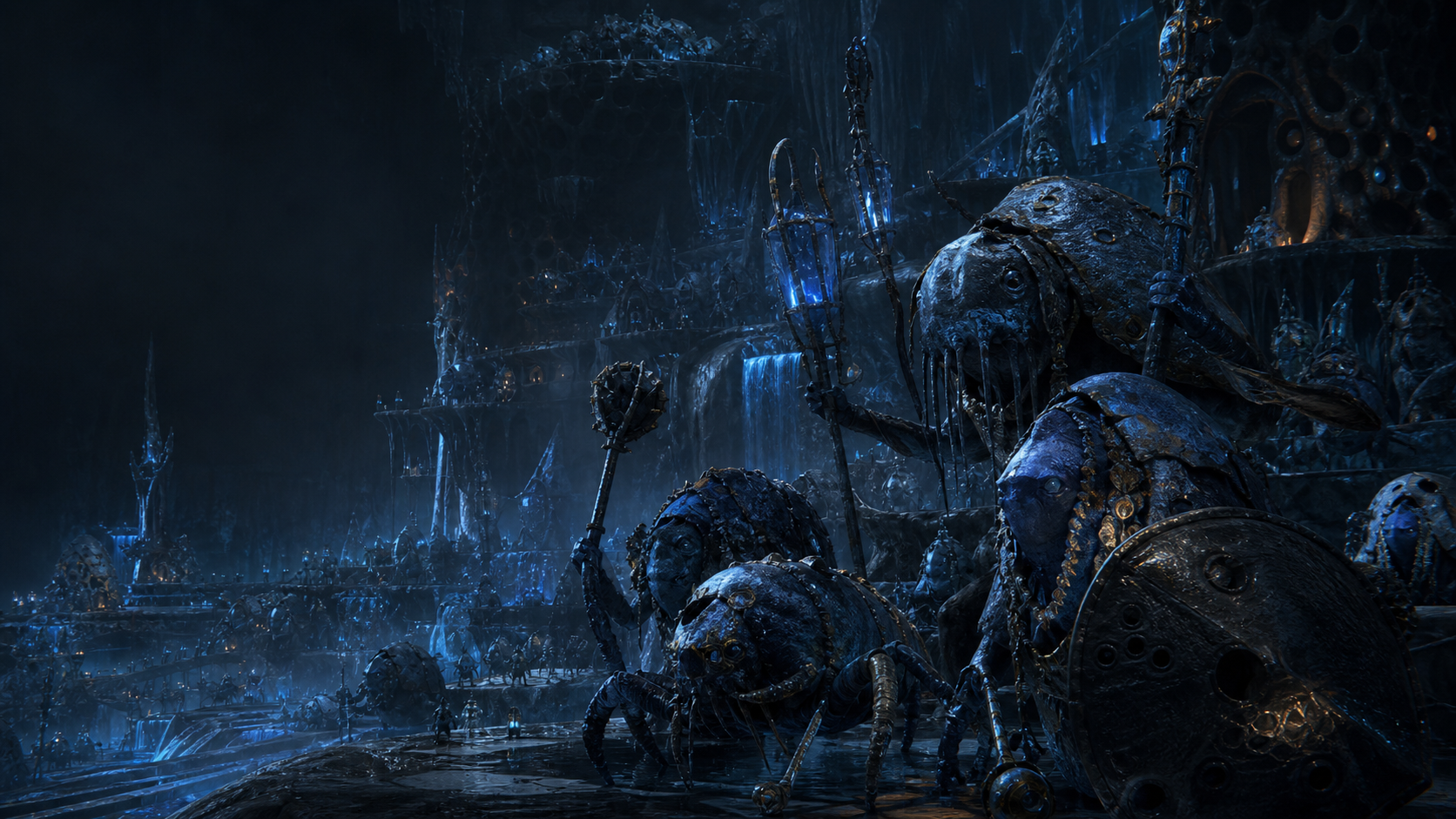
KATOYING / YOKAI ECOLOGY
A million possible shapes. One shared trace.
Not one giant mind. Not a row of identical workers. A Yokai is a small role that appears when useful, makes one bounded move, leaves evidence, then rests.
The idea
Yokai are the friends who put their hands in the work. One notices a weak signal. Another searches. Another tests. Another carries a useful result to the next surface. They can be strange, uneven and highly specialised. Their value comes from the move they complete, not from looking intelligent.
They do not need to be beautiful. They need to be useful together.
Eight roles
Detect a weak signal, change or contradiction before it disappears into noise.
Gather relevant evidence and patterns without pretending the first result is the answer.
Run a small controlled experiment inside a declared local or synthetic boundary.
Turn one direction into the smallest object that can answer back.
Challenge a claim with the same input, predicate and visible evidence.
Move context, proof or a useful tool between people, surfaces and machines.
Keep a reusable episode and let failed moves become material instead of shame.
Exercise defensive self-play in owned sandboxes. HIVE AEGIS lives here.
Living cycle
No permanent occupation is required. A Yokai may exist for one useful minute and still have done its job.
The million
“One million Yokai” names a design space: many combinations of skills, contexts, tools, devices and human energy can create distinct helpers. It does not mean one million hidden processes are running today.
New roles can be composed when real work reveals a missing hand.
Every active worker count must be reported as observed, local and time-bound.
Two doors